


Five benefits of recycling agricultural nets
Agricultural nets play a fundamental role in protected agriculture and different agricultural production systems such as organic production, integrated production, integrated pest management, etc.
They protect crops against extreme weather phenomena and ensure sustainable and profitable production (reducing the consumption of resources such as water, pesticides, fertilizers, etc.)
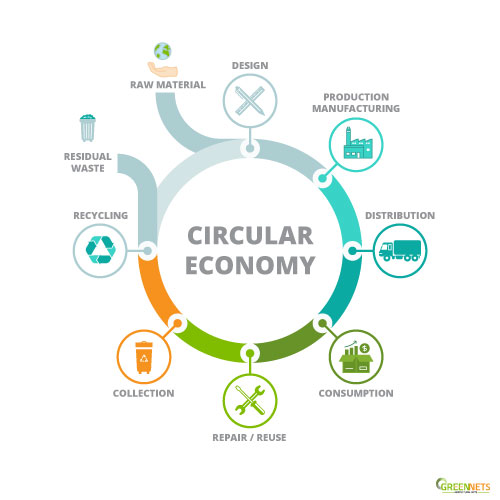
Recycling and Circular Economy
Agricultural nets are made of high-density polyethylene (HDPE), a food-safe, durable, and recyclable material.
In fact, HDPE is one of the most easily recyclable plastic polymers, which can be utilized and transformed in recycling centers.
For recycling, agricultural nets are classified according to color, quality, etc. They undergo a process of cleaning, shredding, and homogenization, which concludes with extrusion, resulting in plastic pellets or recycled granules that can reenter the market for these materials.
Recycling allows them to be transformed into new products, thereby participating in the Circular Economy.
What are the benefits of recycling nets for the environment?
1. Environmental Protection
The recycling of agricultural nets directly contributes to environmental protection. By recycling them, we prevent them from ending up in landfills or being dispersed in inappropriate locations, thus reducing soil and water pollution. Proper recycling of nets is an effective way to minimize negative environmental impacts and promote sustainable agricultural practices.
2. Promoting the circular economy
The recycling of nets promotes the circular economy, an approach that aims to minimize waste and maximize the reuse of materials. By recycling nets, they are given a second useful life by being transformed into new products.
3. Conservation of natural resources
Recycling agricultural nets contributes to the conservation of natural resources. For every ton of plastic recycled, approximately one ton of petroleum is saved. By recycling and reusing the nets, this resource is preserved for products that require virgin raw materials. Moreover, plastic recycling saves energy compared to the production of virgin plastic, resulting in a lower carbon footprint and increased energy efficiency.
4. Application of responsible agricultural practice
In an increasingly environmentally conscious world, consumers value sustainable and environmentally-friendly practices. By demonstrating a commitment to recycling and sustainability, agricultural producers will positively address the needs of consumers.
5. Compliance with regulations and standards
Recycling of agricultural nets also helps farmers comply with environmental regulations and standards. Currently, in many countries, proper disposal of agricultural waste, including nets, is required by law. By recycling the nets, farmers avoid potential fines and penalties, ensuring that their operations follow environmental regulations.
The reuse and recycling of products slow down the consumption of natural resources, reduce landscape and habitat alteration, and contribute to limiting biodiversity loss.
At GreenNets, we are aware of our responsibility as manufacturers and are committed to sustainability. That is why we have our own recycling plant and follow an environmentally responsible production process.

Sources: https://www.cr-arcosur.com/gestion-plasticos-agricolas, https://ecoembesdudasreciclaje.es/, https://www.europarl.europa.eu/