


In the world of agriculture, increasing crop productivity is a constant goal. But how can you achieve it efficiently and sustainably? The use of agricultural nets has been gaining ground in protected agriculture, as it can positively influence the soil, water, plant, and plant environment, leading to higher yields and more efficient use of resources.
Agricultural nets and productivity
Agricultural nets, also known as net structures, are a sustainable production technique that has become a cornerstone of protected agriculture. Their main advantage lies in their ability to partially control the microclimate surrounding the plants. This has a significant impact on productivity, as it translates into higher yields and a reduction in the use of essential resources such as water, fertilizers, and biocides. Below, we highlight the most important aspects to consider when cultivating under nets:
Influence on Soil and Water
The soil acts as support for plants, providing water, oxygen, and nutrients through their roots. This is where agricultural nets begin to demonstrate their effectiveness.
- Reduction in water consumption: one of the key benefits of agricultural nets is their ability to reduce water consumption. These structures decrease wind speed, which in turn reduces leaf evaporation, decreasing water absorption by the roots and, ultimately, water consumption.
The microclimate generated under the nets also contributes to this savings by increasing humidity and reducing heat in the growing environment.
- Soil protection and erosion: agricultural nets provide soil protection by reducing the impact of raindrops. This minimizes soil structure disturbance and improves water absorption, reducing runoff and erosion.
Influence of Agricultural Nets on the Plant Environment
The proper selection of agricultural nets can have a favorable influence on the plant environment in areas such as:
- Reduction in pesticide consumption: nets act as a natural barrier that hinders insect entry, thereby reducing the need for pesticides. This promotes the production of healthier and more resistant crops.
- Protection against extreme weather conditions: in addition to insects, nets also protect against extreme weather conditions such as hail, reducing plant vulnerability and risk.
- Optimization of solar radiation: structures protected with nets control the amount of sunlight reaching the plants, preventing excessive radiation and aiding in photosynthesis regulation. The choice of net color can have a significant impact on light dispersion and, ultimately, production.
Benefits for the Plant
All elements that can be worked on to benefit plants will be reflected in better health, more homogeneous fruits, and optimal characteristics in terms of taste, color, and more. In this regard, we highlight two important points:
- Increase in production: agricultural nets provide a controlled environment that meets the plants’ needs in terms of water, nutrients, and solar radiation. This leads to optimal development of processes such as photosynthesis, resulting in higher yields per hectare.
- Improvement in crop quality: control of phytosanitary conditions under nets allows compliance with market standards for healthier foods. Additionally, they protect crop skins by reducing damage caused by sun exposure, resulting in higher-quality and caliber fruits.
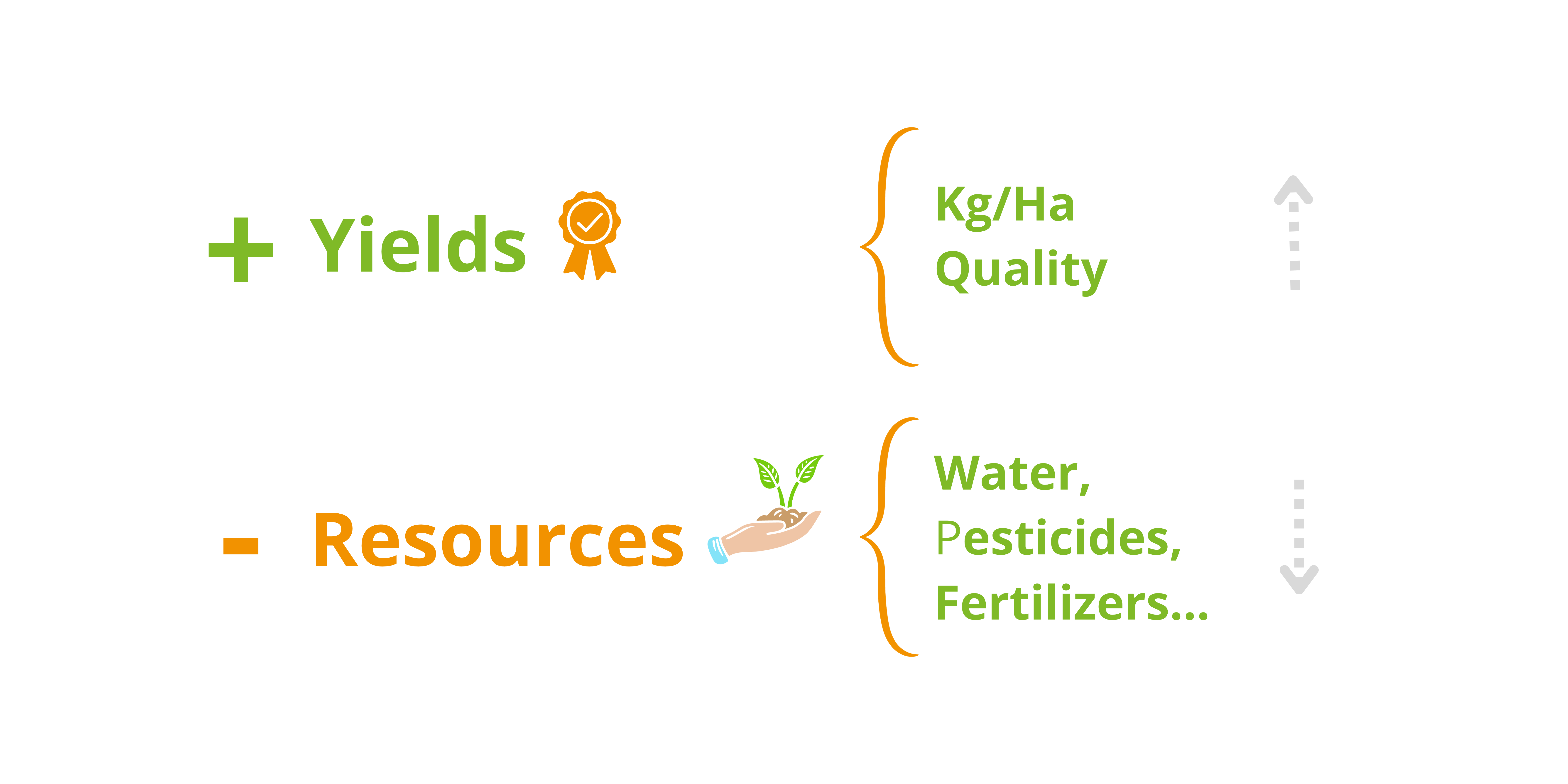
The use of nets for crop protection offers an effective and sustainable way to increase productivity. These structures have a positive impact on yields, crop quality, and optimize the use of essential resources.
In summary, how agricultural nets contribute to increasing crop productivity can be simplified as follows:
For more information, contact us at info@greennetsagro.com

Sources: https://www.bbva.com/es/sostenibilidad/que-es-la-agricultura-protegida-y-como-contribuye-a-la-sostenibilidad-de-la-produccion/, https://infoagronomo.net/